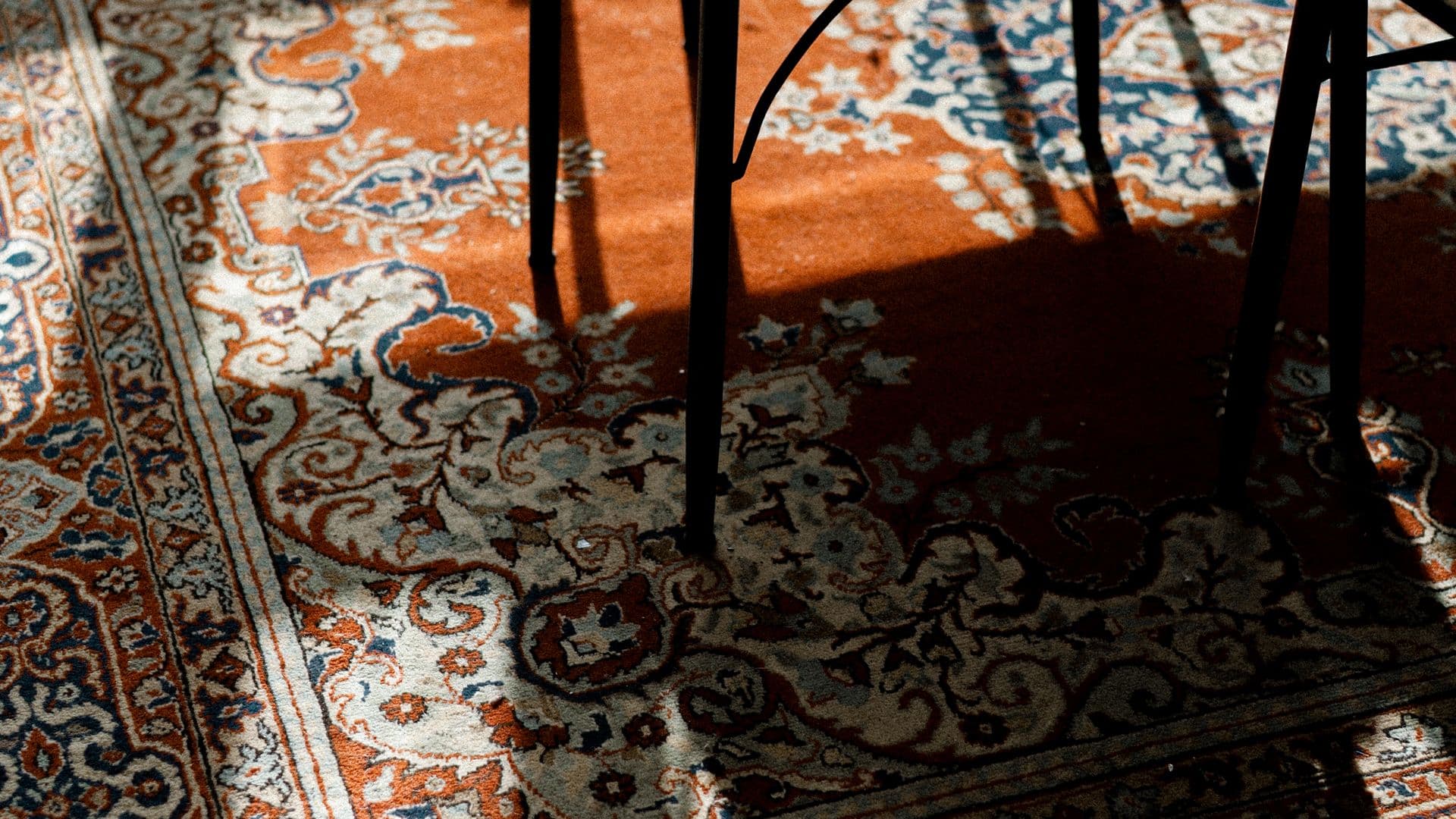

Area rug or Oriental rug? Why the cleaning process isn't the same
Both get fully submerged and washed by hand in our plant. What changes is how gently, and with what.
"Rug cleaning" gets treated like one service, but a machine-made synthetic runner and a hand-knotted Persian rug can be decades apart in construction, dye chemistry and fragility. Using the same process on both either under-cleans one or risks real damage to the other.
What area rug cleaning covers
This is the everyday category: machine-made wool, synthetic (polypropylene, nylon, polyester) and blended rugs. They're generally colorfast, consistently constructed, and can handle a full wash-and-rinse cycle without much risk. The main job is getting dust and soil fully out of the base, which is why we pick these up rather than cleaning them on your floor — an in-home clean can only ever reach the surface.
- ✓Free pickup and delivery
- ✓Dust extraction before washing
- ✓Hand-washed and rinsed by fiber type
- ✓Controlled, flat drying
What makes Oriental and Persian rugs different
Hand-knotted Oriental, Persian, silk and antique rugs are a different animal entirely. They're constructed thread by thread on a foundation that can be decades or generations old, often dyed with natural or vegetable-based dyes that behave differently under water and heat than synthetic dyes do.
“A machine wash can strip dye and crush a hand-knotted pile. That's not a risk worth taking on a rug that took months to make and can't be replaced.”
Why dye-testing comes first
Before a drop of water touches an Oriental rug, every color gets tested for bleeding. Natural dyes are more prone to running than synthetic ones, and once a color bleeds into a neighboring section, it typically can't be reversed. That test is the difference between a rug that comes back looking original and one that comes back with a new, permanent stain.
Why it's washed by hand
Machine agitation is built for durability, not delicacy — it's fine for a synthetic runner and too rough for a hand-knotted foundation, which can loosen knots or fray fringe over repeated cycles. Hand-washing takes longer, but it's the only way to clean a hand-knotted rug without putting mechanical stress on knots that were tied by hand in the first place.
How to tell which one you have
- Flip a corner over. Hand-knotted rugs show individual knots on the back that mirror the pattern on top; machine-made rugs show a uniform woven backing.
- Check the fringe. On a genuine hand-knotted rug, the fringe is usually an extension of the foundation threads, not sewn on separately.
- Look at the pattern from the back. If it's visible and slightly irregular, it's likely hand-knotted; a perfectly uniform, less distinct pattern usually means machine-made.
When in doubt, treat it like an Oriental rug. Testing and hand-washing a synthetic rug costs a little more time; running a machine wash on a hand-knotted one can cost you the rug.
The short version
Area rug cleaning is built for everyday synthetic and wool blends — durable, colorfast, and safe for a full wash cycle. Oriental rug cleaning slows everything down for hand-knotted, natural-dye and antique construction, starting with a dye test and ending with a hand-wash instead of a machine one. Knowing which category your rug falls into is the first step to getting it cleaned instead of damaged.
Call or send a photo — we’ll tell you what it’ll take, no charge for the answer.
Contact us

Not sure which category your rug is?
Send a photo and we'll tell you which process it needs before we ever pick it up.