Why your leather furniture is cracking (and how to actually stop it)
Leather doesn't crack from age alone. It cracks from losing the oils that keep it flexible — and that's preventable.
It's easy to assume a cracking leather sofa is just getting old. Age plays a role, but in most of the pieces we see, the real cause is drying out — leather losing the natural oils that keep it flexible — and that's almost always something that could have been prevented.
What's actually happening when leather cracks
Leather is skin, and like skin, it stays flexible because of oils and moisture within the material. Every time it's cleaned, sat on, or exposed to heat and sunlight, some of that moisture is lost. Conditioning is what replaces it. Without that step, leather gradually stiffens, and stiff leather cracks under the everyday stress of being sat on, leaned on and flexed.
- ✓Sunlight and heat — direct exposure accelerates moisture loss significantly faster than normal use.
- ✓Water-based cleaning — the wrong process strips oils rather than replacing them.
- ✓Never conditioning — even leather that's never cleaned wrong will still dry out over years without conditioning.
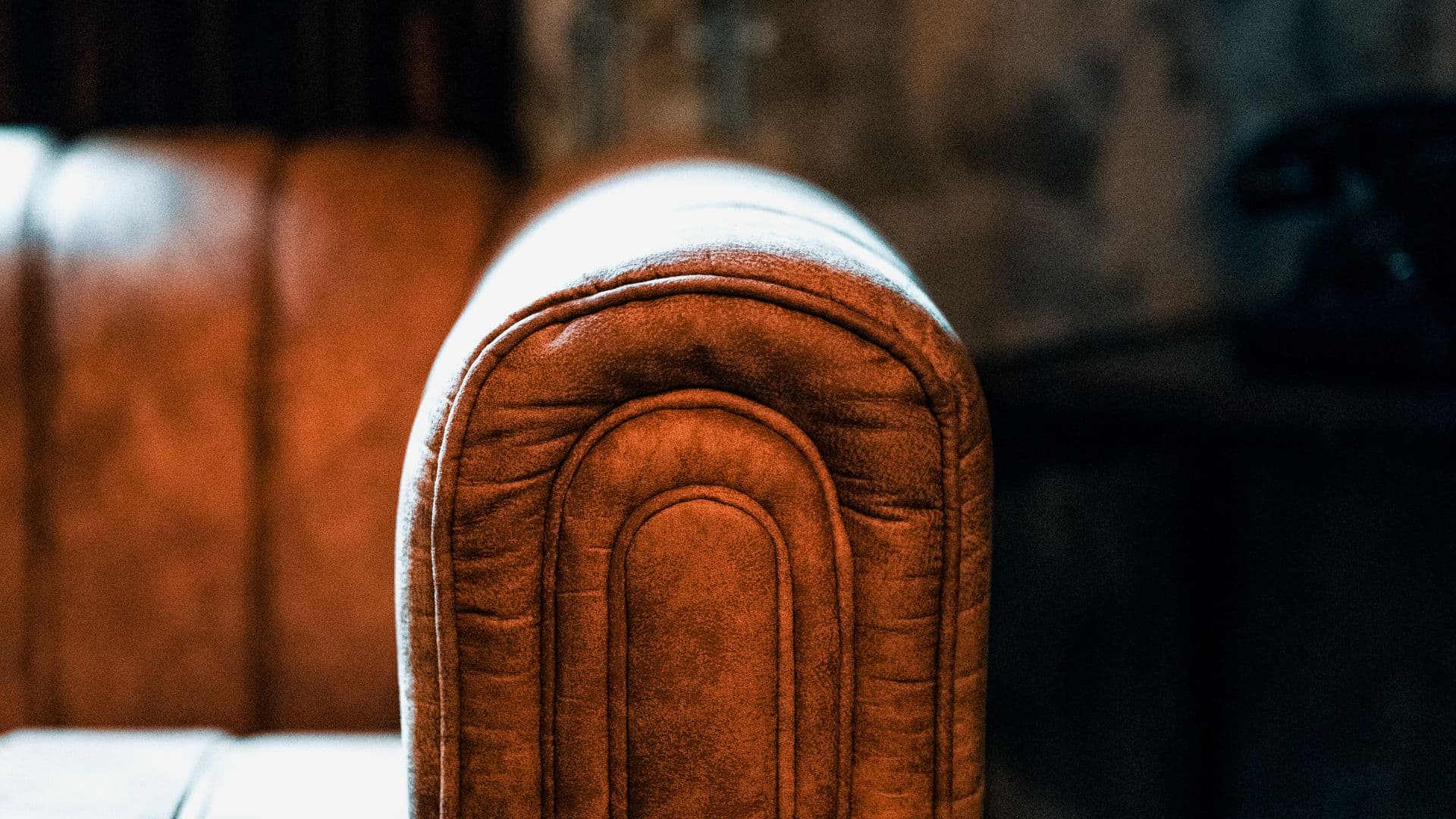
- ✓High-contact areas — armrests and seat edges dry out and crack first because they flex the most.
Why cleaning leather like fabric makes it worse
Fabric upholstery cleaning relies on water-based solutions that get worked into the fibers and then extracted back out. That process is exactly wrong for leather. Oversaturating a hide with water-based cleaner strips the natural oils holding it together, and once those oils are gone, no amount of surface cleaning brings them back — only conditioning does.
“Leather absorbs water differently than fabric. Oversaturating it strips natural oils and can cause stiffening, cracking or watermarks that a fabric-safe process would never cause on cotton or polyester.”
The right process
1. Identify the finish
Aniline, semi-aniline and pigmented leather each respond differently to cleaners and conditioners. Using a product matched to the wrong finish type can leave a residue or an uneven sheen, even if it doesn't cause outright damage.
2. Clean with a pH-balanced product, not water extraction
A pH-balanced leather cleaner lifts body oils and surface soil without saturating the hide the way a water-based fabric cleaner would.
3. Condition every time, not just when it looks dry
Conditioning after every cleaning — and periodically between cleanings — is what actually prevents cracking. Waiting until leather visibly looks dry or is already showing surface cracks means treating damage that's already started, rather than preventing it.
Conditioning restores flexibility and slows further cracking, but it can't reverse deep cracks or significant color loss. Catching dryness early is far more effective than treating advanced damage.
The short version
Leather cracks when it loses the oils that keep it flexible — usually from sun and heat exposure, water-based cleaning, or simply never being conditioned. The fix is a pH-balanced cleaner instead of water extraction, plus regular conditioning matched to the leather's specific finish. Catch it early enough, and cracking is almost entirely preventable.
Call or send a photo — we’ll tell you what it’ll take, no charge for the answer.
Contact us
See cracking or stiffness starting?
The earlier it's conditioned, the more flexibility comes back.